Building Your HRA
Your organization is unique, your benefit plan should be too.
When it comes to health insurance benefits, health reimbursement arrangements (HRAs) give employers the most control to design a benefit that meets their organization’s needs. Regardless of how the plan is designed, an HRA is a great benefit for participants because it’s fully funded by the employer and it helps cover out-of-pocket health costs not covered by the employer’s insurance plans.
Flexible Design Options
HRAs have flexible design options so employers can customize each part of their plan including who the benefit is for, what the benefit will cover, when participants have access to the benefits, and how the coverage will be broken down. Our Regional Sales Directors work with brokers and employers to go over these questions and build a plan design that is unique to each organization.
Plan Design Examples
We’ve helped employers design thousands of plans. Let’s take a look at a couple example HRAs that we have designed for employers in the past. You can jump to our deductible coverage, HSA-Compatible plan, specific coverage, HRA with Benefits Card, retiree benefit, aggregate HRA, and embedded HRA examples.
Contact us for more information about HRAs and our flexible design options.
Deductible Coverage
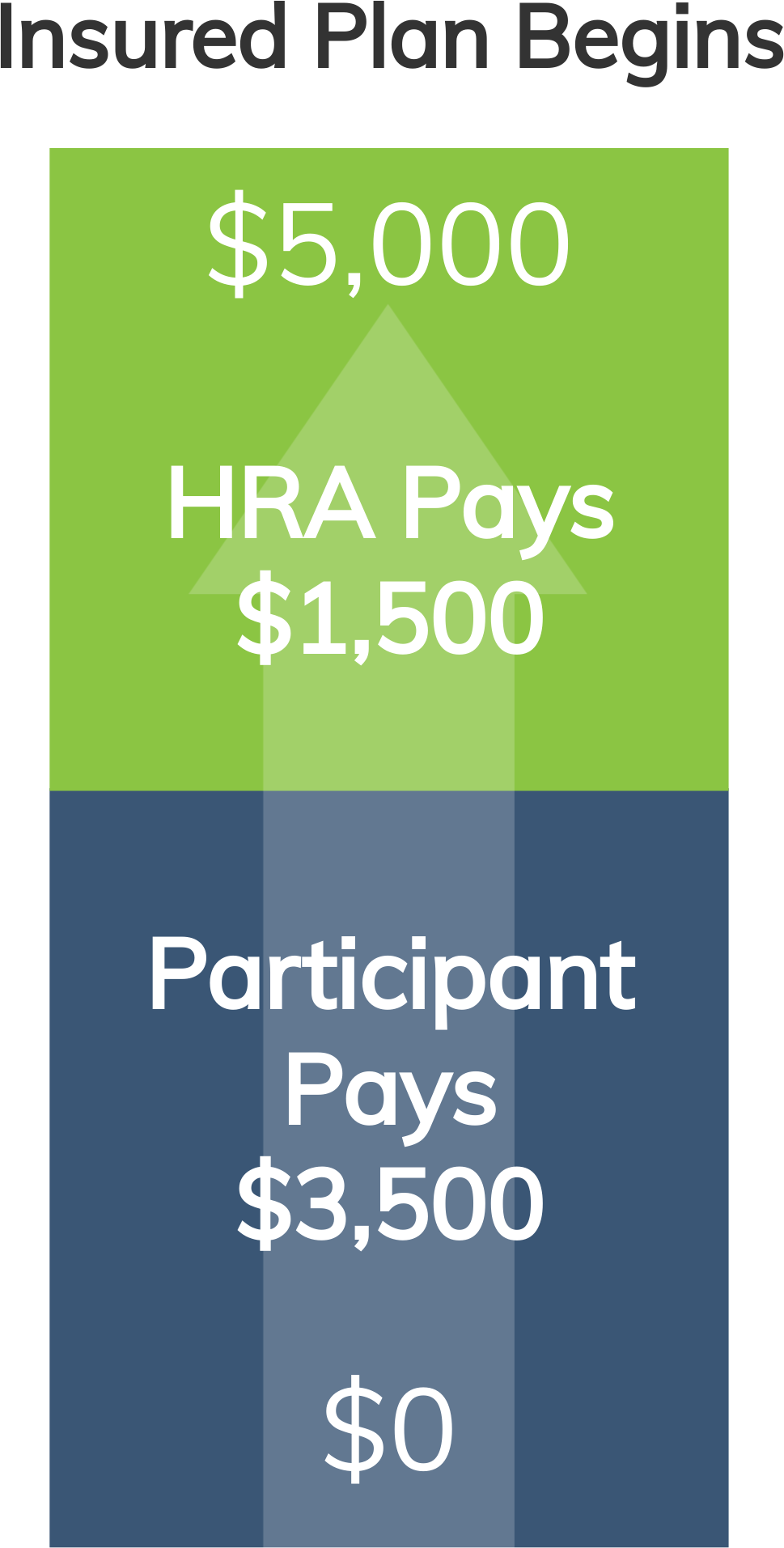
Benefit Scenario: An employer is adjusting their health plan from a $3,500 deductible to a $5,000 deductible to help meet rising health coverage costs. They are looking for an HRA plan design to help their participants with this increased deductible.
Selected Plan Design: A two-tier HRA with aggregate coverage for the $5,000 deductible. The participants pay the first $3,500 of the deductible. The HRA then pays for the remaining $1,500.
Eligible Expense: Deductible
Additional Features: This plan design can also be set up to have an aggregate or embedded deductible.
HSA-Compatible Plan

Benefit Scenario: An employer is introducing a health savings account (HSA) where participants can contribute HSA funds up to the maximum annual contribution limit and save for future medical expenses. They also want to offer an HRA to help with the health plan’s $6,000 deductible and still preserve the participant’s HSA eligibility.
Selected Plan Design: A two-tier HRA with aggregate coverage where the participant pays 100% of their first expenses, up to the IRS established minimum deductible for HSA participants. Then the HRA pays 100% after the minimum deductible is met by the participant. If the participant doesn’t have $6,000 of deductible expenses when the health plan deductible resets, the employer saves this money.
Eligible Expense: Deductible
Specific Coverage
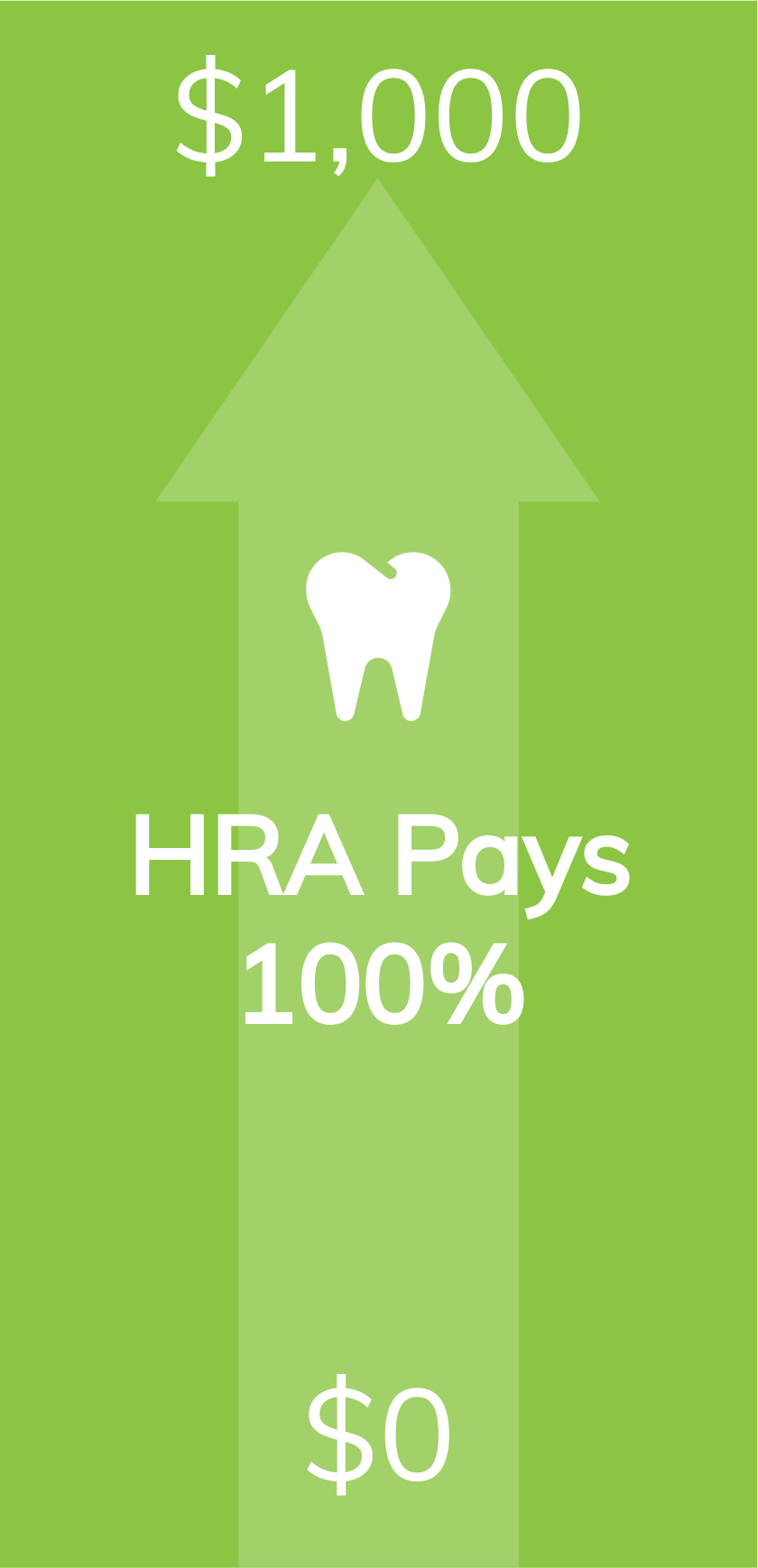
Benefit Scenario: An employer is looking to offer specific coverage, in this case dental, without enrolling in a specific dental insurance plan. They plan to offer this coverage alongside a health care FSA.
Selected Plan Design: A one-tier plan design where the HRA pays up to $1,000 for eligible dental expenses.
Additional Features: The participant can choose to contribute to the health care FSA, which they can use to pay for dental expenses above the $1,000 covered by the HRA or other Section 213-eligible expenses. The Benefits Card can be structured to use HRA dollars first for eligible dental expenses and then pull funds from the health care FSA for remaining qualified health care expenses.
HRA with Benefits Card

Benefit Scenario: An employer offers a health plan with a $3,000 deductible. They are looking to pair their health plan with an HRA that includes a Benefits Card so that they can support their employees through the “sticker shock” of health care and prescription costs.
Selected Plan Design: A two-tier plan design with a Benefits Card. The HRA pays 100% of the first expenses up to $1,500 and the participant pays 100% of the next $1,500 until the $3,000 deductible is met.
Eligible Expense: Deductible
Retiree Benefit
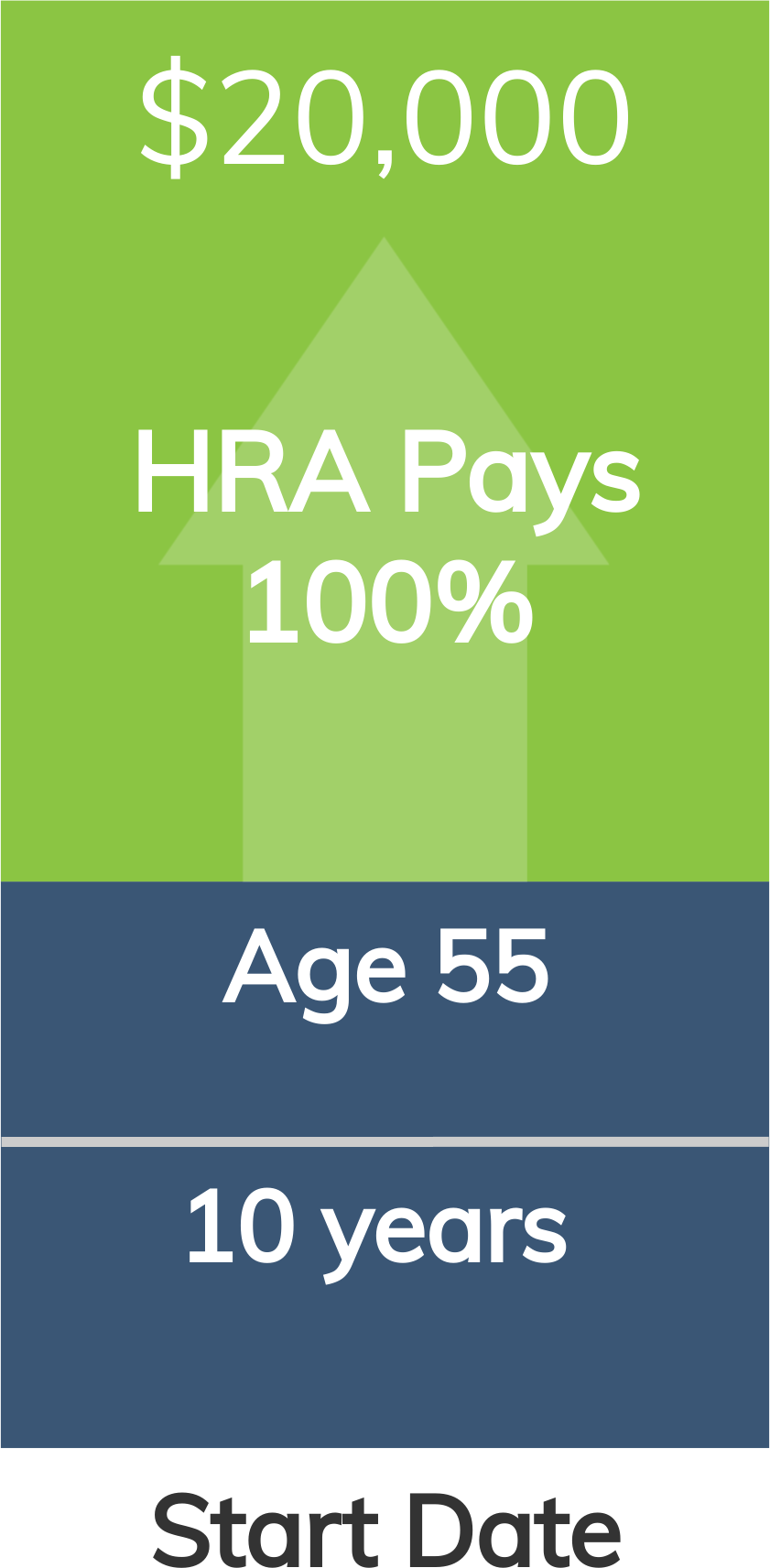
Benefit Scenario: A public sector employer is looking to provide funds for health care coverage to their employees after they retire.
Selected Plan Design: A two-tier plan design for retirees who are at least 55 years old and have worked at the company for at least 10 years. Retirees that meet these requirements receive a lump sum of $20,000 that they can use towards their health insurance premiums.
Eligible Expense: Health Insurance Premiums
Aggregate HRA
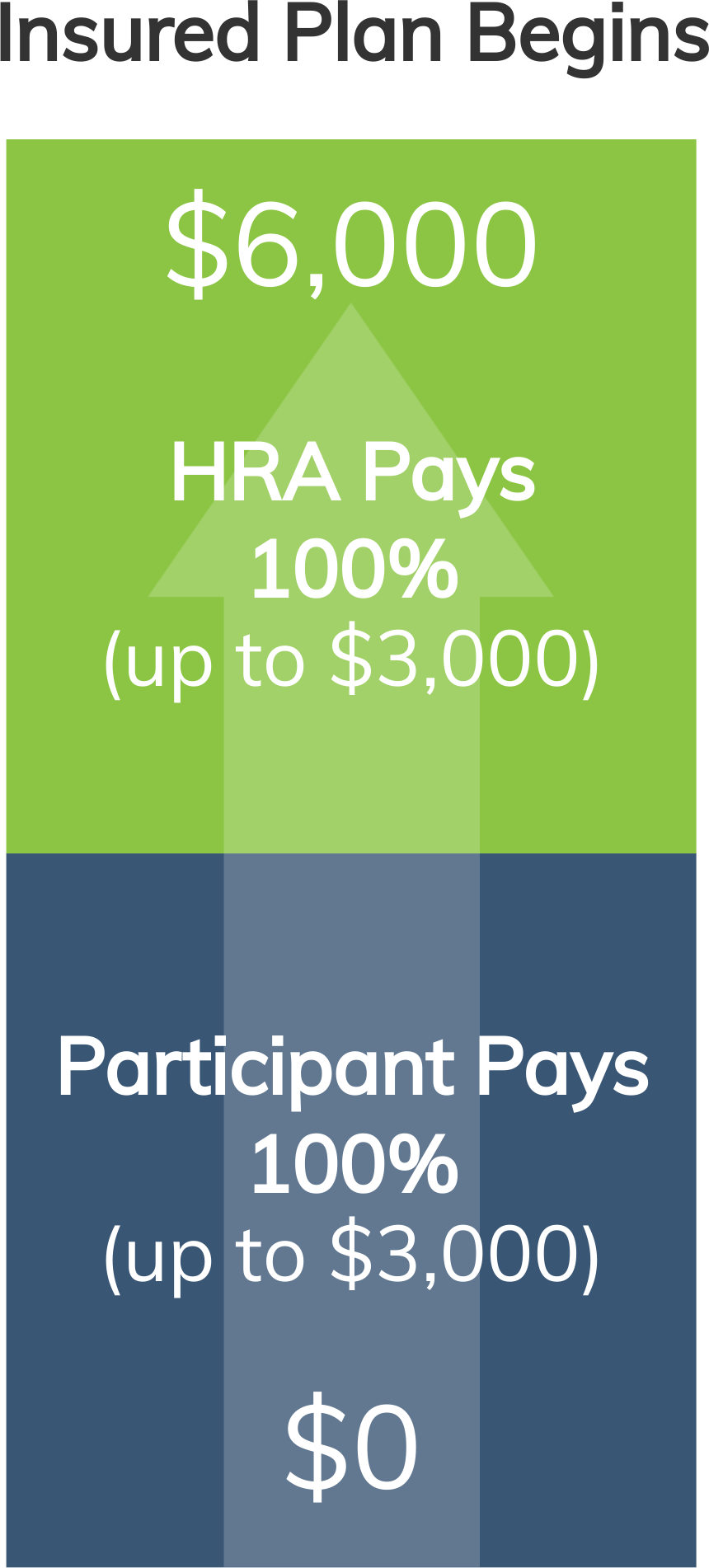
Benefit Scenario: An employer offers a family health plan with an aggregate deductible for 4 people and wants to help them save on their out-of-pocket costs. There is a $6,000 family deductible.
Selected Plan Design: A two-tier plan design where the participant pays 100% of the first $3,000 of expenses, regardless of the individual. Then the HRA pays 100% after that, up to $3,000, regardless of the individual.
Eligible Expense: Deductible
Embedded HRA
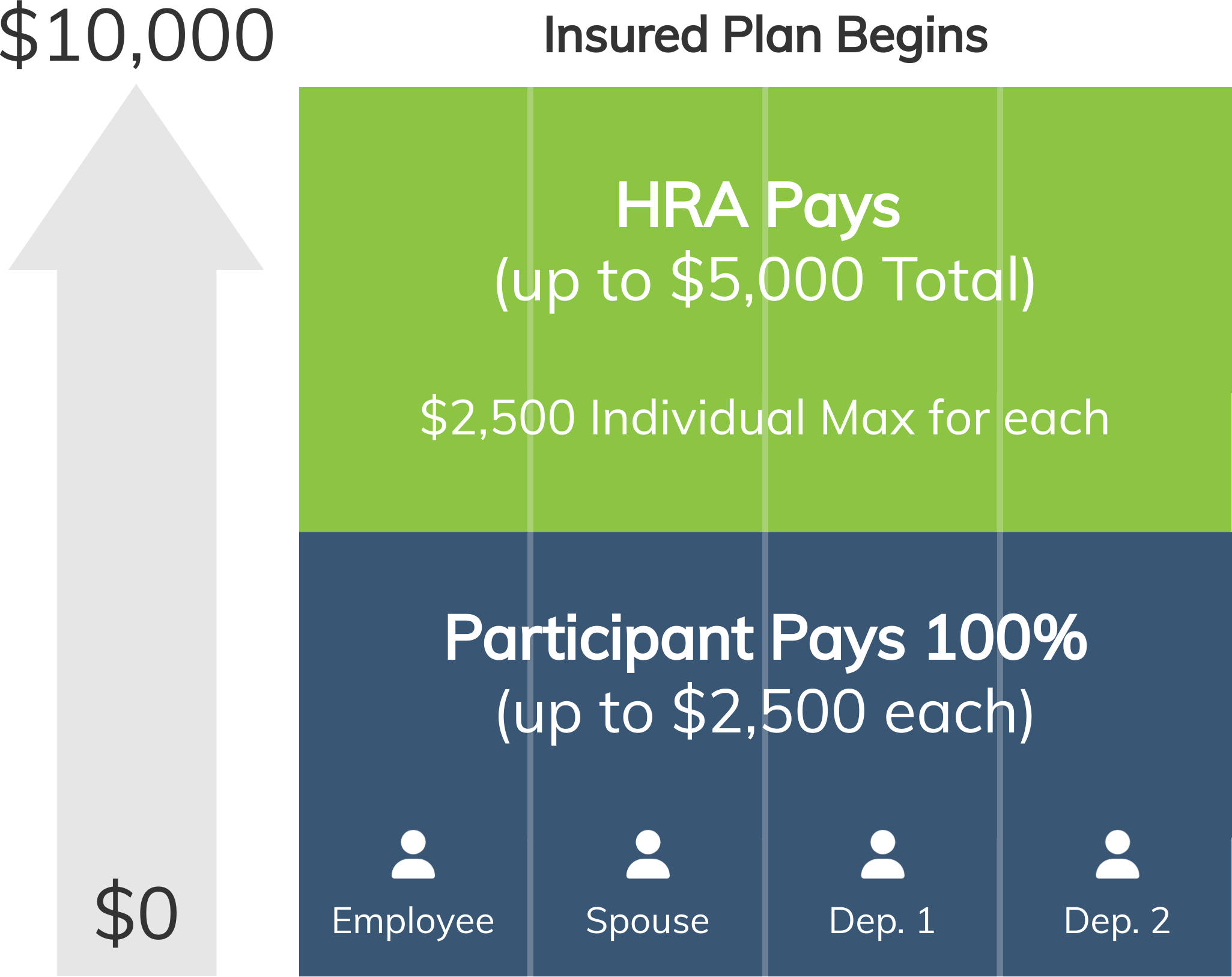
Benefit Scenario: An employer offers a family health plan with an embedded deductible for 4 people and wants to help them save on their out-of-pocket costs. There is a $10,000 family deductible and a $5,000 individual deductible.
Selected Plan Design: A two-tier plan design where the HRA pays up to $2,500 per individual and $5,000 total. The participant pays the first $2,500 for each individual. When an individual meets the $2,500 obligation, the HRA pays up to $2,500 for that individual. The HRA pays this way up to $5,000 in total.
Eligible Expense: Deductible